
Warm Wood Tones Are Back and They Look Nothing Like Your Parents’ Oak Cabinets
For more than a decade, the dream kitchen was white. Now, warm wood kitchen cabinets are making a comeback as homeowners trade bright, all-white spaces for walnut, cherry and white oak. These natural finishes make kitchens feel inviting and lived-in without bringing back the honey-orange oak cabinets of the 1990s.
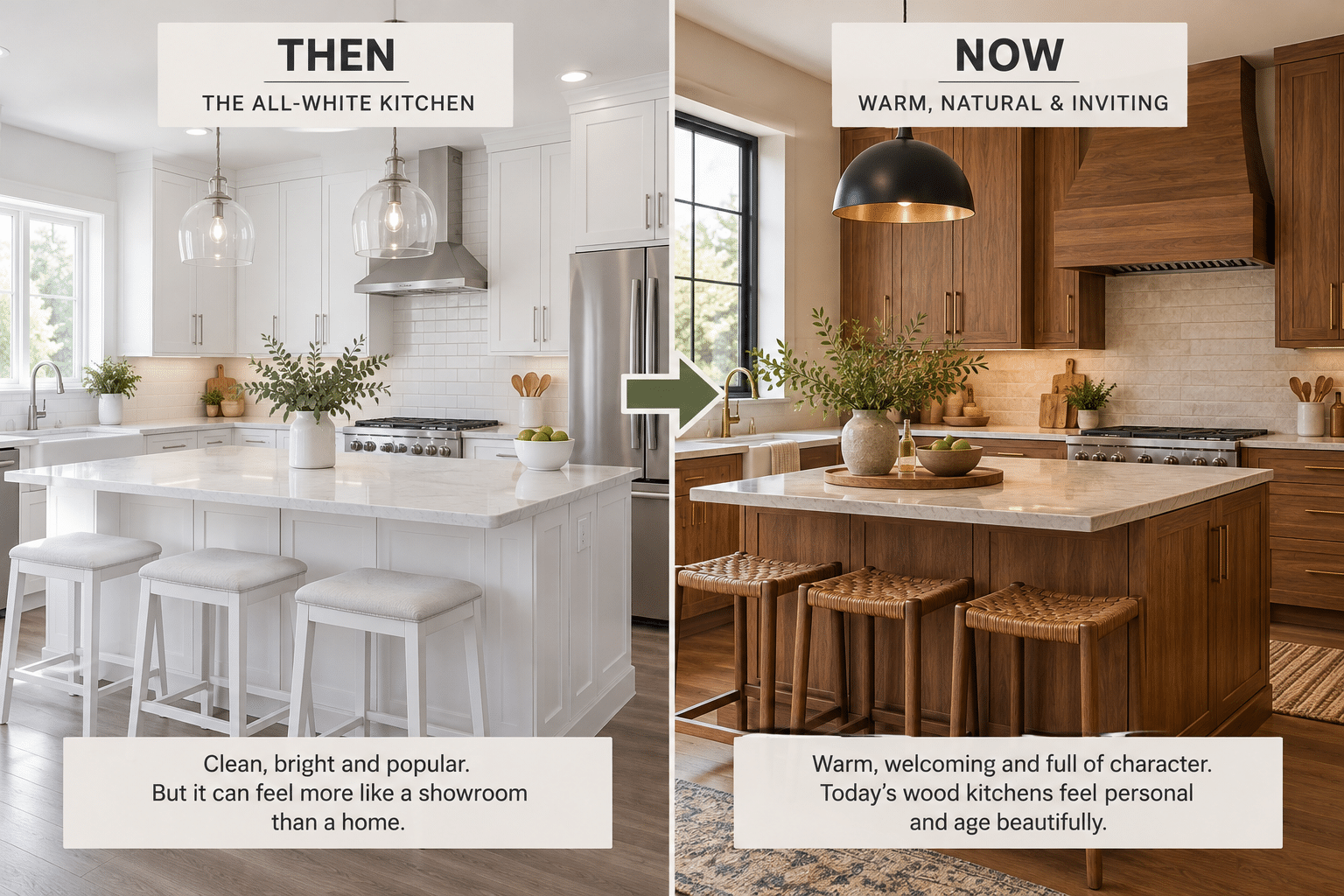
The End of the All-White Kitchen
White kitchens earned their run. They felt clean and bright and were positioned as safe for resale. White cabinets, subway tile and quartz became the default in model homes and house flips. For years, choosing anything else felt like a gamble.
Daily life told a different story. An all-white room shows every coffee drip and every scuff from the vacuum. It can also feel more like a showroom than a place where you cook dinner and help with homework. Many homeowners now want kitchens that feel welcoming, and wood adds that warmth without clutter.
The timing makes sense. Homeowners have poured serious money into their houses over the past few years. Home improvement and repair spending jumped to $611 billion in 2022, up from $404 billion in 2019. With that much going into kitchens, people want finishes that feel personal and age gracefully. Natural wood checks both boxes.
Why Today’s Wood Looks Nothing Like 1990s Oak
Picture a 1990s kitchen and you probably see red oak. It was affordable and sturdy, but red oak has a bold, wavy grain that reads as busy across a big wall of cabinets. Builders often paired it with a honey stain and an oil-based clear coat. Over time, that clear coat yellowed with sunlight and age. Pink wood and an amber finish pushed the whole kitchen toward orange. Raised-panel doors, brass knobs and almond appliances made the look harder to update.
Today’s wood kitchens rely on calmer grain and subtler shapes. Rift-cut white oak shows tight, straight lines rather than large cathedral arches. Flat slab doors or slim Shaker frames replace heavy raised panels. Finishes lean matte or satin, so the wood looks natural rather than glossy.
Say you own a 1994 split-level with red oak raised-panel cabinets. The boxes are solid, but the doors look dated. A cabinetmaker measures every opening, then builds new rift white oak slab doors and drawer fronts. Soft-close hinges replace the old hardware. The kitchen looks modern without changing the layout. The weak spot is the exposed sides of the cabinet boxes, which need matching veneer to hide the old oak.
The Wood Species Gaining Ground
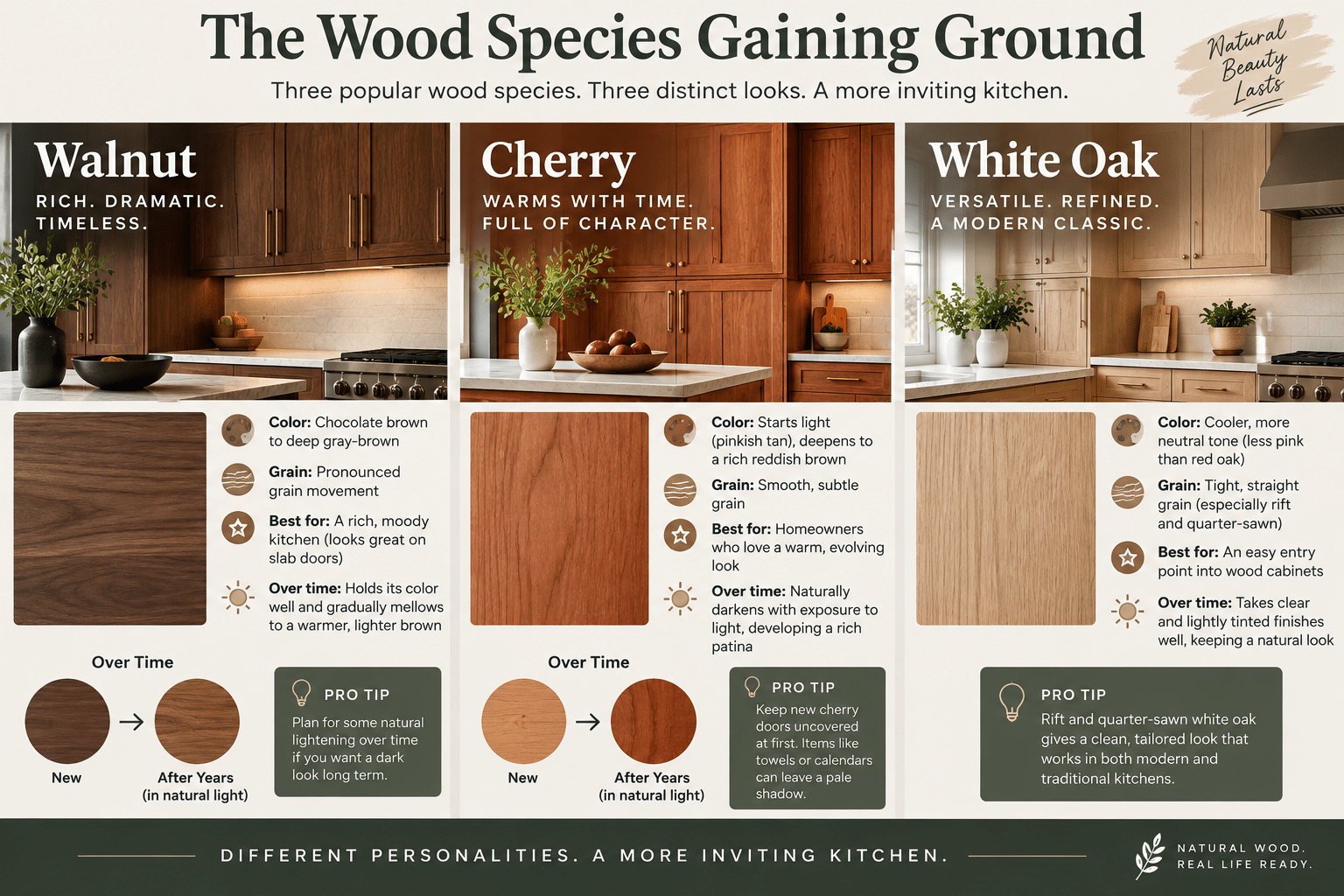
Three species keep showing up in current kitchen designs. Each one brings a different mood and changes color over time in its own way.
Walnut
Walnut is the go-to choice for a rich, moody kitchen. Its heartwood ranges from chocolate brown to deep gray-brown, with pronounced grain movement. It looks beautiful on slab doors, where the grain gets room to show off.
Walnut also behaves differently in light than most woods. Research on 23 species found that walnut held its color better than many other tested woods after UV exposure. Over the years, walnut tends to mellow toward a warmer, lighter brown. Plan for that shift if you want a dark look long term.
Cherry
Cherry starts surprisingly pale, often a light pinkish tan. Then it changes. Most native species darkened under UV exposure, and cherry was among them. In a sunny kitchen, fresh cherry wood gradually deepens toward a rich reddish brown. That patina is the appeal for many homeowners. One practical tip is to keep new cherry doors uncovered for the first stretch. Towels or calendars hung in one spot can leave a pale shadow behind.
White Oak
White oak is the easy entry point for anyone leaving the white kitchen behind. It has a cooler, more neutral base than red oak, so it skips that pink cast. Rift and quarter-sawn cuts give it straight, even grain that feels tailored. It also takes clear and lightly tinted finishes well, which keeps the look natural. If you want warmth without a big color commitment, white oak is a safe place to start.
Finishes That Keep Wood Looking Current
The finish decides whether your new cabinets look fresh or slide back toward 1995. Solid wood shines when you plan to stain, since stain highlights each species’ natural grain and color variation. That matters most for walnut and cherry, where the variation is the point. Medium-density fiberboard suits painted doors better, so save solid wood for the cabinets you want to show off.
Sheen matters, too. Satin and matte finishes hide fingerprints and read more naturally than high gloss. Ask about water-based clear coats, too, since they tend to stay clearer than oil-based options that amber with age. Follow the finish manufacturer’s ventilation, protective equipment and fire safety instructions during application and drying.
Test every stain on a real door sample rather than a tiny chip. Check it in morning light and under nighttime kitchen lighting. Wood keeps shifting after it’s finished, too. Accelerated indoor-light testing found that finished wood could still change color, with the direction and extent depending on the species and coating.
How to Pair Wood Cabinets With Other Materials
Wood looks best when the rest of the kitchen stays simple. The goal is contrast without competition.
Start with the countertop, since it sits right against the cabinets. Pale quartz or honed marble brightens dark walnut. Soapstone pairs well with cherry. Over time, soapstone develops a soft patina and darkens slightly, and it resists stains and acids well. That makes it forgiving in a kitchen that gets daily use.
Two-tone layouts are another strong option. A common setup puts walnut on the island and a painted color, like sage green or warm white, on the perimeter cabinets. The island becomes the focal point, and the painted cabinets keep the room bright. Undertones are where this setup breaks. A cool gray paint can make warm walnut look muddy, so hold paint chips right against your wood sample before you commit.
Keep the backsplash simple when the wood has a strong grain. Handmade zellige, plain plaster, or a single stone slab works better than busy patterned tile. For hardware, unlacquered brass and aged bronze warm up white oak, while matte black adds edge to walnut. Floors count, too. Matching your floor species exactly to your cabinets can look flat, so aim for a clear step up or down in tone.
Planning Your Wood Kitchen Renovation
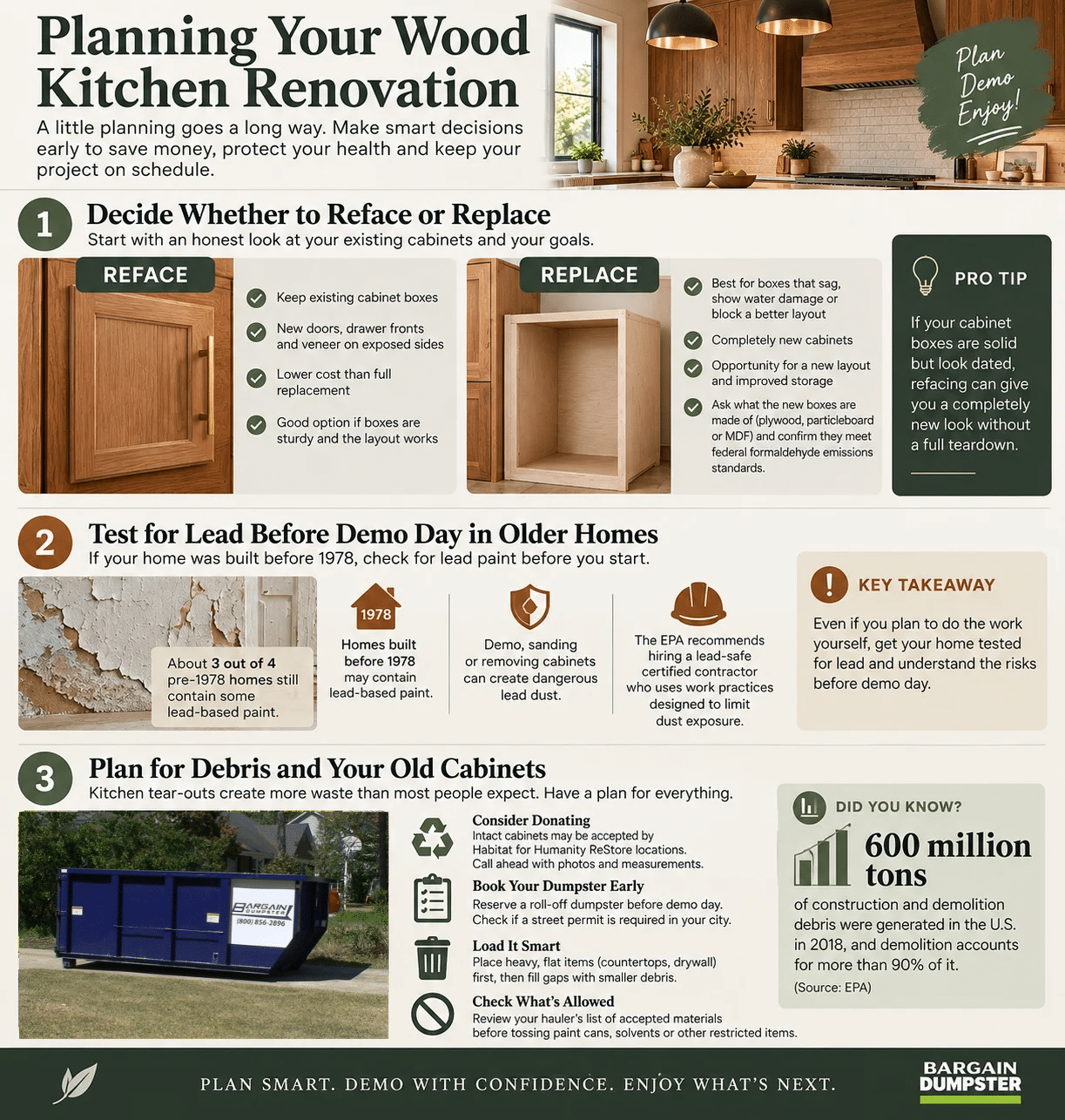
A wood kitchen starts long before the first door goes up. A few early decisions save money, protect your health and keep the project on schedule.
Decide Whether to Reface or Replace
If your cabinet boxes are sturdy and the layout works, refacing may be enough. That means new doors, drawer fronts and veneer on the exposed sides while the boxes stay in place. Full replacement makes sense when boxes sag, show water damage or block a better layout.
If you replace, ask what the new boxes are made of. Plywood, particleboard and medium-density fiberboard all show up in cabinet construction, and composite panels sold in the United States must meet federal formaldehyde emissions standards. Ask your supplier to confirm compliance before you place an order.
Test for Lead Before Demo Day in Older Homes
If your house was built before 1978, check for lead paint before anyone pries off a cabinet or sands a wall. According to the Environmental Protection Agency (EPA), about three-quarters of pre-1978 homes still contain some lead-based paint. Tearing out painted trim, soffits or old cabinets can turn that paint into dust.
Federal rules generally let homeowners work on their own homes without certification, but the EPA recommends hiring a lead-safe certified contractor. A certified renovator uses lead-safe work practices designed to limit dust exposure for everyone in the house.
Plan for Debris and Your Old Cabinets
Kitchen tear-outs create more waste than most people expect — cabinets, countertops, drywall, tile and packaging pile up fast. Nationally, construction and demolition work generated 600 million tons of debris in 2018, the EPA reports, and demolition accounts for more than 90% of it. The EPA also notes that donating usable materials to a qualified charity can lower disposal costs and may bring a tax benefit.
Intact cabinets often get a second life. Many Habitat for Humanity ReStore locations accept complete cabinet sets in good condition, though each store sets its own rules. Call ahead with photos and measurements. Remove doors carefully, label each box and keep the hardware in bagged sets so the next owner can reinstall everything.
Whatever is left needs a plan. Book your roll-off dumpster before demo day. Place it where trucks can reach it without blocking a neighbor’s driveway. If the only open spot is the street, street placement may require a permit from your city, so check local rules early. Load heavy, flat items like countertops and drywall first, then fill gaps with smaller debris. Check your hauler’s list of accepted materials before tossing paint cans or solvents.
Wood You Look at That?
Warm wood kitchens are back for good reason. Walnut, cherry and white oak bring depth and character that an all-white room rarely matches. With modern cuts, softer finishes and smart pairings, your cabinets can feel current now and look even better as they age. Plan the tear-out as carefully as the design. When demo day arrives, Bargain Dumpster offers roll-off dumpster rentals for home renovations to help you clear out the old kitchen and make room for the new one.