
Holiday Decluttering Checklist: How to Prepare Your Home in October
October is an ideal time to get ahead of holiday clutter. The celebrations may still be weeks away, but decorations, gifts, entertaining supplies and seasonal clothing can quickly compete for space once the busy season begins. A thorough October declutter gives you a chance to clear what you no longer need, clean the areas that are often overlooked and create practical storage systems before your home fills up again.
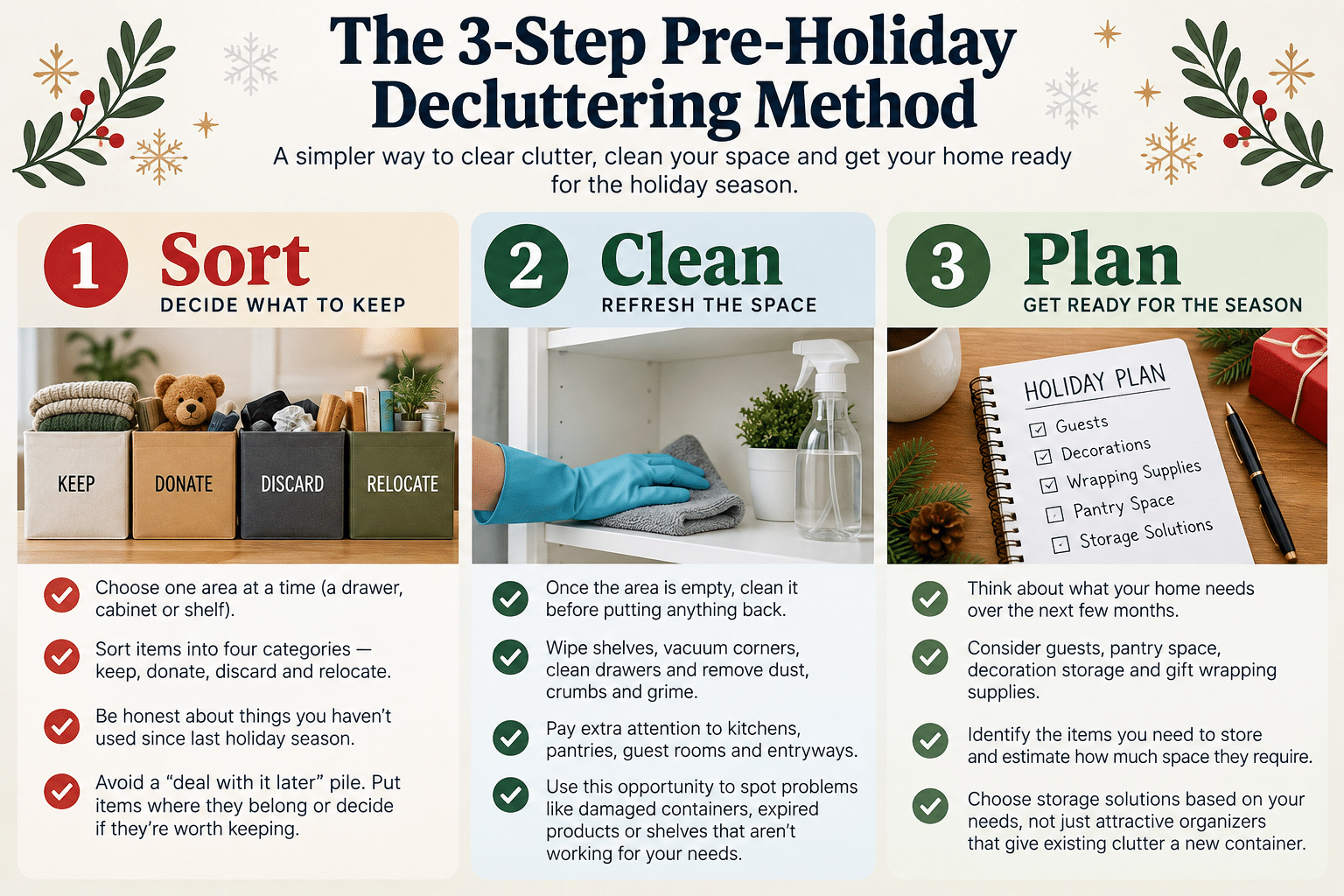
The 3-Step Pre-Holiday Decluttering Method
A successful pre-holiday declutter doesn’t mean emptying every cabinet and making your entire home look like a storage facility exploded. Instead, work through these three simple stages.
-
Sort
Start by choosing one area at a time rather than attempting to declutter the entire house in one afternoon. Empty a drawer, cabinet or shelf and divide everything into four categories — keep, donate, discard and relocate.
Be particularly critical of items you haven’t used since the last holiday season. If you’ve been storing something for months because you might need it someday, October is a good time to decide whether that possibility is realistic.
Avoid creating a large “deal with it later” pile. If something belongs somewhere else, put it there immediately. If it needs repairing, decide whether you’re genuinely going to repair it. The goal isn’t to move clutter around but to reduce the amount of stuff competing for space.
-
Clean
Once an area is empty, clean it before putting anything back. Wipe shelves, vacuum corners, clean drawers and deal with crumbs, dust and grime that are easy to ignore during everyday tidying.
This step is especially useful in kitchens, pantries, guest rooms and entryways, where holiday activity tends to increase. Cleaning while the space is empty also gives you an opportunity to spot problems such as damaged storage containers, expired products or shelves that are no longer working for your needs.
-
Plan
Finally, think about what your home needs to accommodate over the next few months. Are guests staying over? Will you need additional pantry space? Where will decorations go? Do you have somewhere convenient to store wrapping paper and gifts?
Planning before buying new organizers is important. Otherwise, it’s easy to purchase attractive storage products that give existing clutter a new container. Instead, identify the things that need to be stored, estimate how much space they require and then choose storage around those needs.
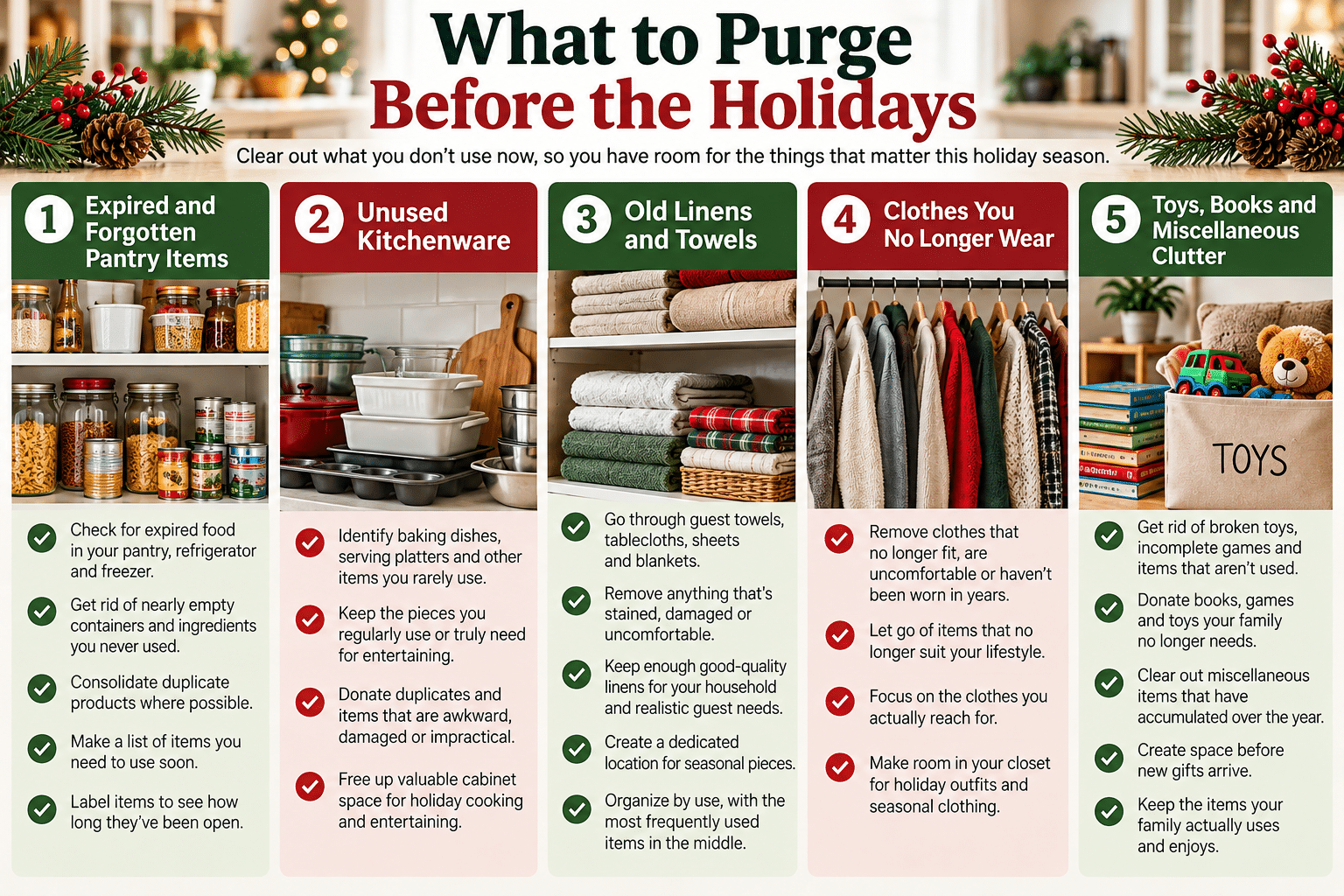
What to Purge Before the Holidays
Holiday preparation is easier when you’re not trying to find space for new things among items you already know you don’t use.
Expired and Forgotten Pantry Items
Check your pantry, refrigerator and freezer for expired food, nearly empty containers and ingredients you bought for a recipe but never used again. Consolidate duplicate products where practical and make a list of items you need to use soon. This can also create more room for the ingredients and entertaining supplies you’re likely to need later. Labeling items is a great way to see how long they’ve been open.
Unused Kitchenware
Holiday meals often expose weaknesses in kitchen storage. You may suddenly discover that you have six baking dishes but only use two, or a collection of serving platters that takes up an entire cabinet.
Keep the pieces you regularly use and those that genuinely serve a purpose when entertaining. Donate the duplicates and anything you consistently avoid because it’s awkward, damaged or impractical.
Old Linens and Towels
Go through guest towels, tablecloths, sheets and blankets. Anything badly stained, damaged or uncomfortable doesn’t need to occupy valuable storage space simply because it might be useful one day. Keep enough good-quality linens for your household and realistic guest needs, then create a dedicated location for seasonal pieces. Organize items by use, with the most frequently used in the middle of the cabinet.
Clothes You No Longer Wear
Holiday gatherings can make closets feel especially crowded. Remove clothes that no longer fit, are uncomfortable, haven’t been worn in years or no longer suit your lifestyle.
You don’t need to create a minimalist wardrobe overnight. The objective is to make room for the clothes you actually reach for.
Toys, Books and Miscellaneous Clutter
If your home has accumulated toys, books, games or miscellaneous items throughout the year, October is a useful point for a reset. Broken toys, incomplete games and forgotten items can often leave before new gifts arrive.
This is particularly helpful in homes where children may receive presents during the holiday season. Creating space beforehand means new belongings don’t immediately become another source of clutter.
Smart Storage Solutions for Seasonal Rotation
Once you’ve removed what you no longer need, look at how you store the things you use only during particular times of year. Clear, stackable containers can make seasonal storage easier because you can see what’s inside without opening every box. Label opaque containers clearly, too. A label such as “tree decorations” is much more useful than a generic “Christmas” label when you’re searching for one specific item months later.
Keep seasonal belongings together where possible. Decorations, entertaining supplies, wrapping materials and seasonal linens can each have their own designated zones rather than being scattered throughout different storage areas.
Vertical space is another useful opportunity. Shelving, hooks, over-the-door organizers and tall cabinets can increase usable storage without taking up additional floor space. By keeping belongings off the ground, you can prevent potential tripping hazards and keep loved ones safe.
For rarely used items, prioritize storage locations that are out of the way but still accessible. Frequently used holiday supplies shouldn’t be buried at the back of a closet simply because they’re seasonal.
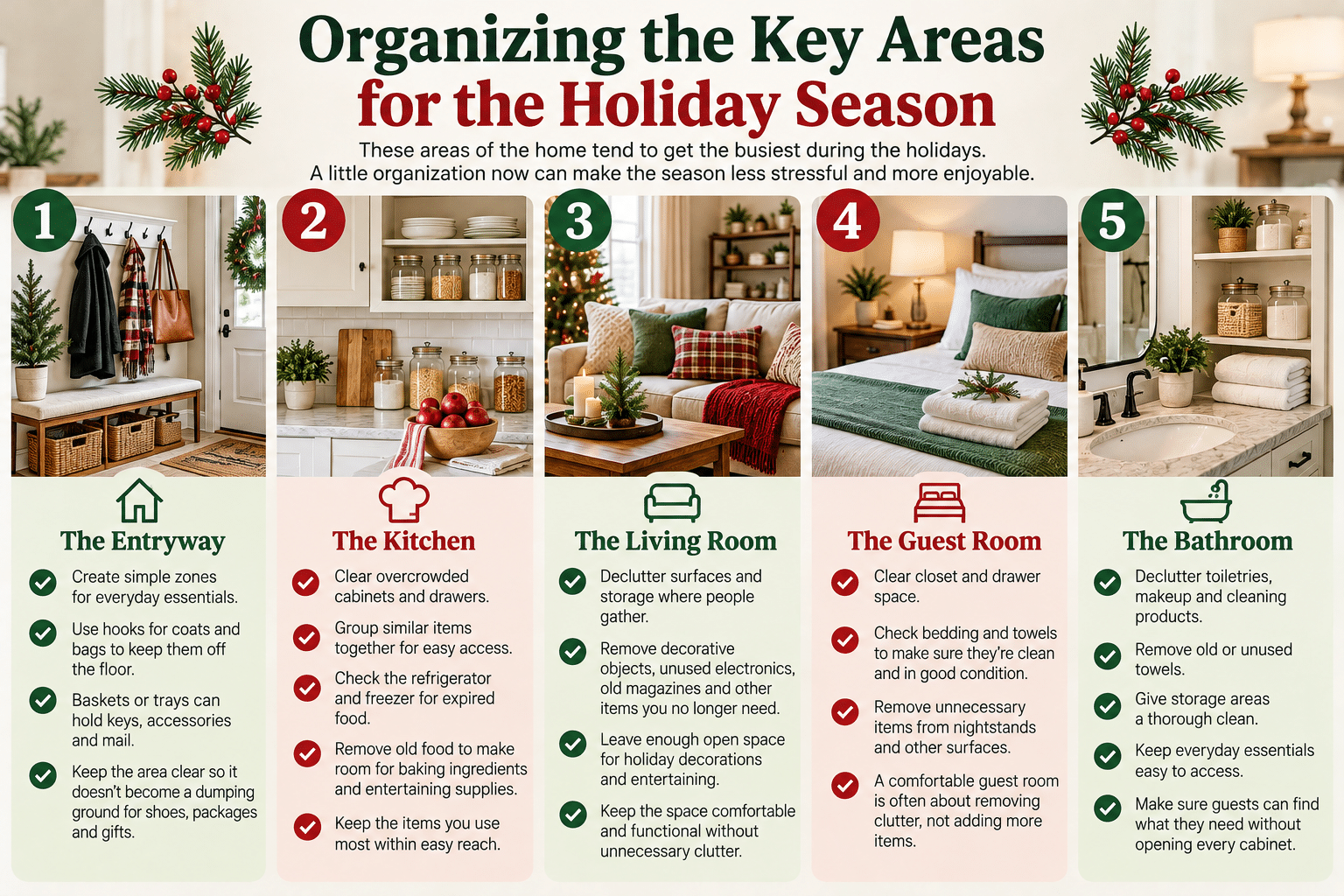
Organizing the Key Areas for the Holiday Season
Some areas of the home deserve extra attention because they tend to experience a noticeable increase in activities during the holidays.
The Entryway
The entrance to your home can become a dumping ground during busy periods. Shoes, coats, bags, packages and gifts can quickly accumulate.
Create simple zones for everyday essentials. Hooks can keep bags off the floor, while baskets or trays can contain smaller items such as keys, accessories and mail.
The Kitchen
Clear overcrowded cabinets and drawers before you need additional space for baking ingredients, serving dishes and entertaining supplies. Group similar items together so you can quickly find what you need when preparing meals.
Check your refrigerator and freezer, too. Removing old food now gives you more flexibility when you begin buying ingredients for larger meals.
The Living Room
Look at the surfaces and storage around the areas where people actually gather. Remove decorative objects you no longer like, unused electronics, old magazines or anything that has gradually become part of the furniture because there was nowhere else to put it.
Leave enough open space for decorations and entertaining. Your home doesn’t need to be completely empty, but it should have room to breathe.
The Guest Room
If you expect visitors, prepare the guest room before December rather than trying to do everything immediately before someone’s arrival. Clear closet and drawer space, check bedding and towels and remove anything that has accumulated on bedside tables or other surfaces. A comfortable guest room is often less about adding things and more about removing unnecessary items.
The Bathroom
Declutter toiletries, makeup, cleaning products and old towels, then give storage areas a thorough clean. Make sure everyday essentials are easy to access and that guests can find what they need without opening every cabinet.
Create a Dedicated Gift-Wrapping Station
Wrapping paper, ribbons, gift bags and cards have a habit of spreading across the house when they don’t have a designated home. Before the holiday season begins, gather all your wrapping supplies and remove anything damaged, dried out or unlikely to be used.
Store wrapping paper vertically where possible, using a tall container or dedicated organizer, and keep smaller supplies such as tape, scissors, ribbons and gift tags together. A small box or drawer can work well for these items, while clear containers make it easier to see what you already have before buying more.
If you buy gifts throughout the year, consider creating a separate gift-storage area. Keeping presents together and out of sight makes them easier to manage and prevents them from being accidentally mixed in with everyday belongings.
Prepare Outdoor Areas for Holiday Gatherings
The inside of your home isn’t the only space that may need a reset. Patios, balconies, yards and outdoor entertaining areas often become extensions of the living space during the holiday season, particularly when you’re hosting larger groups.
Start by removing broken furniture, unused garden accessories, empty plant pots and other items that have accumulated outdoors. Clean the areas that’ll be used for entertaining and check whether outdoor cushions, umbrellas, lighting and serving pieces need attention before they’re needed.
Think about storage, too. Outdoor entertaining is much easier when frequently used items have a clear home. Use weather-resistant storage boxes, shelving or hooks where appropriate, keeping cushions and other weather-sensitive items protected when they’re not being used. This creates a more functional space without requiring a major renovation.

Make October Your Reset Point
An October declutter isn’t about making your home perfectly minimalist before the holidays. It’s about creating enough breathing room that the extra activity, people and belongings that come with the season don’t overwhelm your existing system. If decluttering leaves you with more unwanted items than you can manage, Bargain Dumpster can help make the cleanup process easier with a convenient dumpster rental solution.