
Why Everyone’s Turning Their Backyard Into Another Living Room
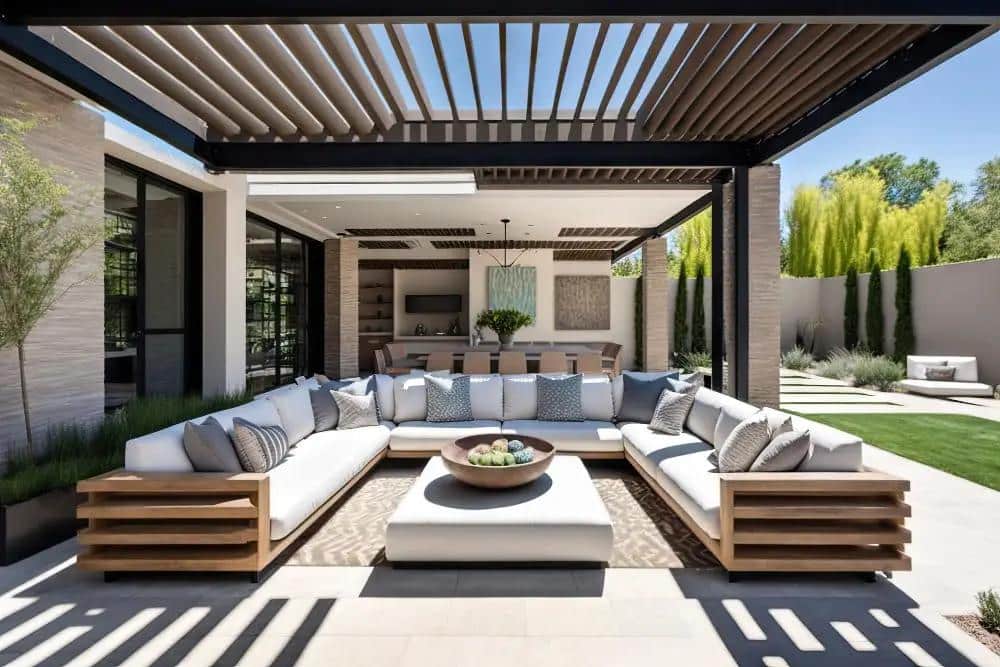
Homeowners are turning their backyards into fully furnished extensions of their homes. Picture sectionals, coffee tables, area rugs and ambient lighting that can give you the same level of comfort as any interior room. This change shows why everyone’s turning their backyard into another living room by creating comfortable spaces that blend indoor luxury with fresh air.
The Rise of the Outdoor Living Room
Your backyard is a destination worth decorating. Homeowners are now investing in furniture, lighting and design elements that reflect the attention given to kitchens and living rooms. This trend has gained momentum as people seek ways to maximize their property’s usable space while enjoying the benefits of open-air living. A 2026 Houzz survey found that 83% of renovated outdoor spaces featured a seating area.
Now, the modern backyard room features everything from weather-resistant sectionals to coffee tables. These spaces create a blend of comfort and function that rivals any interior space.
Why You Should Extend Your Floor Plan Outside
These spaces provide practical value for daily routines, entertaining guests and connecting your home’s interior with the outdoors. The investment pays off in ways you might not expect.
Adding a Breath of Fresh Air to Your Routine
In a backyard living room, you get a space to enjoy fresh air without leaving your home. You can sip your morning coffee surrounded by grass and trees and take work calls from a comfortable seating area. Or, unwind after a long day in an area that feels like an extension of your house.
The lifestyle benefits are significant. According to the National Association of Realtors, 42% of recent homebuyers chose a home based on its outdoor space. This means the backyard has sellability. People value having a place to get fresh air, and they’re willing to make it a priority when house hunting.
Upgrading Your Space for Entertaining
You and your friends or family can hang out in a comfortable setting that accommodates larger groups while keeping the mess outside. It’s a practical solution that makes hosting feel less stressful and more enjoyable. Plus, the kids can run around without breaking anything.
According to the National Kitchen and Bath Association, Outdoor kitchens and grills account for 40% of the standard outdoor features homeowners ask for. Covered or shaded areas follow closely behind at 16%. Additionally, 13% of homeowners specifically requested high-end seating or a lounge area.
These preferences show that backyard spaces function as year-round living areas for hosting and gathering. The days of viewing your backyard as a seasonal space are fading.
Creating a Seamless Indoor-Outdoor Flow
The transition between your home’s interior and your backyard should feel seamless. Think about how you move through your house daily. Data shows 71% of homeowners use their garage door to enter and exit their home every day, making it an important access point to consider when planning indoor-outdoor flow.
Position your setup to integrate with your usual traffic patterns for a more functional layout. You’ll use the space more often when it’s easy to access from your main entry point.
Key Considerations Before You Start Building
Before you start shopping for furniture and decor, think through the practical aspects of creating a backyard living room. A little planning now saves you from headaches later.
Prepping Your Yard and Navigating Demo Work
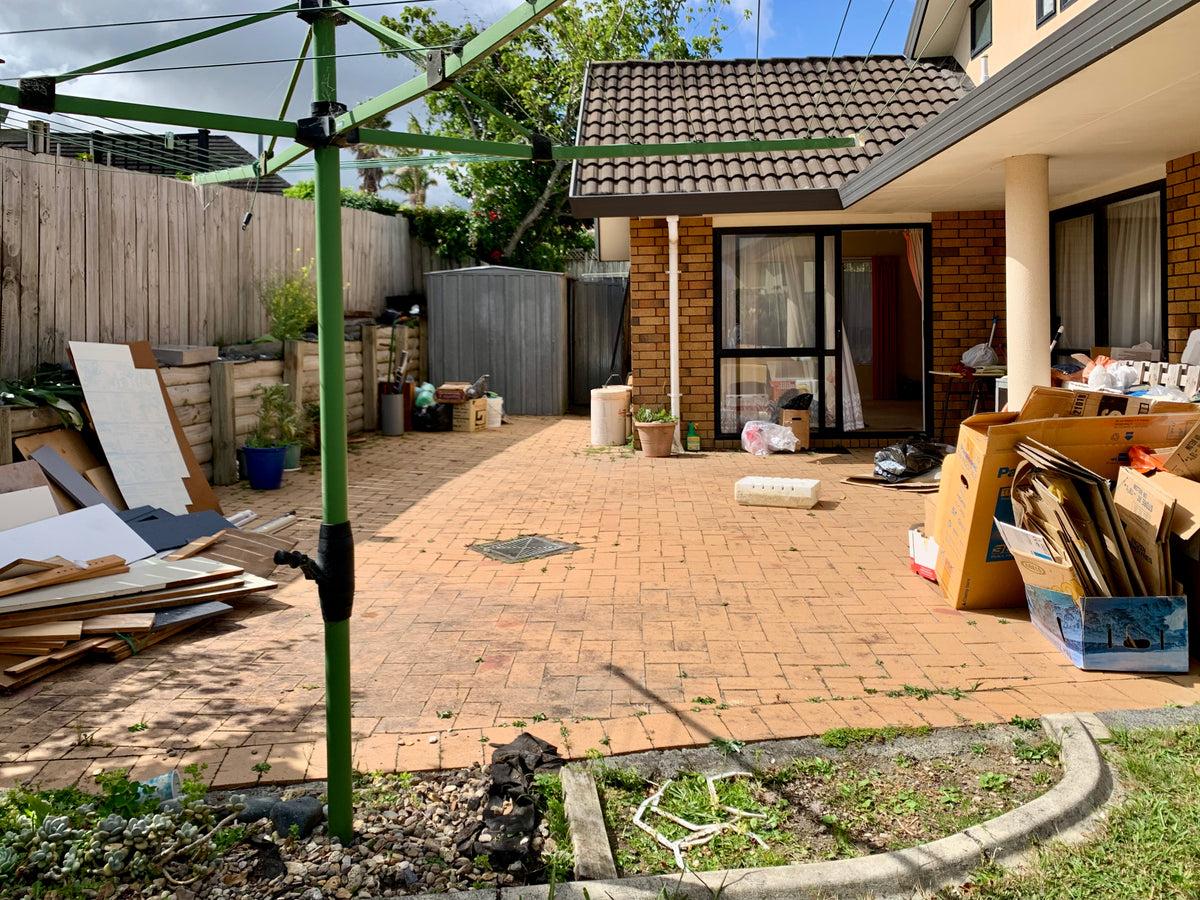
Preparation involves clearing old brush, leveling the ground and creating a stable foundation for your furniture. You may need to remove existing landscaping or lay pavers to create a level surface. These unglamorous tasks set the stage for everything that follows, but you’ll be happy when they’re done. Think of this phase as building the bones of your backyard room.
If your project involves significant grading, excavation or structural work, consulting a professional is worth the investment. A landscape contractor can assess drainage issues, identify underground utilities and ensure your foundation will hold up over time. This prevents expensive fixes down the road. The up-front cost of professional help typically pays for itself.
Accounting for Hidden Costs and Utilities
When planning your backyard room, budget for electrical lines and plumbing installations. Don’t forget those permits for permanent structures. These expenses can catch you off guard if you don’t factor them into the initial budget. It’s easy to focus on the fun parts like furniture and decor while overlooking these essential infrastructure costs.
Backyard kitchens are often a big investment. The installation alone costs thousands of dollars before you account for the appliances, countertops and finishing touches. Cost is a major reason why many homeowners hesitate to renovate their backyards. Be sure to get detailed quotes before committing to major additions to avoid any surprises.
Adding Natural Privacy to Your Space
A true room needs walls. You can achieve this in your backyard through strategic landscaping with hedges, privacy screens, or tall plantings that create natural barriers while adding greenery. This approach softens the hard edges of patios and makes your space feel more intimate. The right greenery also adds beauty while serving a functional purpose.
Choosing low-maintenance hedges or privacy screens ensures you won’t spend every weekend pruning. Slow-growing, hardy varieties like dwarf boxwoods or viburnum require minimal upkeep and shaping while still providing the visual separation you need. Getting a landscaper involved here is worth considering, as improper transplanting can cause shrubs to wilt or die.
Essential Elements to Make It Feel Like a Real Room
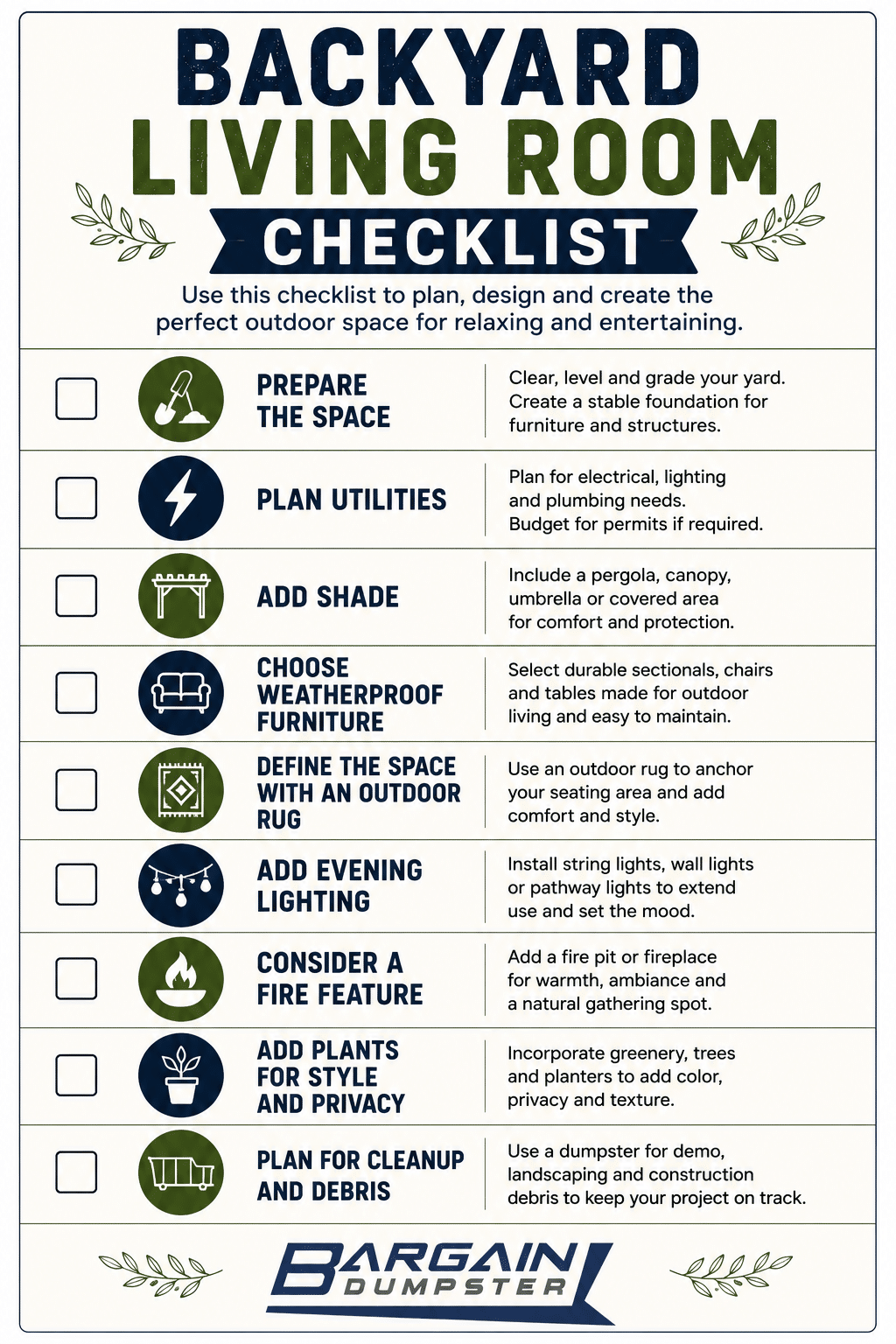
These specific design elements create the structure and ambience that make your backyard room feel complete. Start with the foundational pieces, then layer in the finishing touches.
Defining the Space with Shade Structures
Adding a pergola or awning creates a ceiling for your backyard room while providing shade and defining the boundaries of your space. These structures make the area feel more enclosed and intentional. Without some overhead coverage, the space can feel exposed and undefined.
Pergolas work well for creating dappled shade. They can support climbing plants or fabric panels for additional coverage. Retractable awnings offer flexibility to adjust shade levels throughout the day, whereas freestanding canopies provide a budget-friendly option you can reposition as needed. Installation ranges from simple canopy assembly to professional work for permanent pergolas attached to your house.
Arranging Weatherproof Sectionals and Coffee Tables
Invest in comfortable, durable seating arrangements, such as sectionals centered around a coffee table. These pieces are similar to the gathering point you’d have in an indoor living room. Quality matters here because you want furniture that invites people to linger.
Look for furniture in weather-resistant materials. Powder-coated aluminum frames, all-weather wicker, or teak wood all hold up well. Cushions should feature quick-dry foam cores with solution-dyed acrylic fabric covers that resist fading and mildew. Coffee tables made of concrete, metal or wood with protective finishes withstand rain and sun exposure.
Arrange your seating to encourage conversation, with pieces facing each other.
Grounding the Layout with Rugs
An area rug ties your furniture together and softens hardscaping. This addition creates visual cohesion and appeal that helps define the boundaries of your seating area within a larger patio or deck. It’s one of those finishing touches that makes a massive impact.
Most patio rugs are made from polypropylene or recycled plastic, which is why they hold up so well against moisture and sun damage. They drain quickly after rain. When they get dirty, you can simply hose them off. The maintenance is simple compared to indoor rugs.
Choose a rug large enough that all furniture legs sit on it, or at least the front legs of your seating pieces. A too-small rug can make the space feel disconnected.
Setting the Mood with Lighting and Fire Features
You’ll need lighting to use your backyard living room well into the evening. Layer different light sources to create ambience and functionality.
String lights overhead provide a soft, ambient glow that feels festive. Pendant lamps or lanterns offer task lighting for dining or reading. Solar-powered pathway lights illuminate walkways for safety. Battery-operated or plug-in LED string lights are the easiest to install and come in various bulb styles from Edison bulbs to globe lights.
Mount them on your pergola, fence or house exterior using hooks rated for outdoor use. Add a fire bowl or fire pit as a focal point that provides warmth and draws people together. There’s something primal about gathering around a fire that makes any space feel welcoming. If you want convenience with instant ignition, try propane models. However, woodburning options create ambience with crackling sounds and authentic firelight.
Softening the Edges with Container Gardens
Potted plants blur the lines between your hardscaping and the rest of your yard. They bring life right up to your seating area while adding color and texture. Plants soften the transition between built structures and natural landscapes.
Choose plants suited to your climate and light conditions. If you have shady spots, compact hydrangeas do well in larger pots. Succulents are great for sun and don’t need much water. For height and movement, try ornamental grasses. Herbs like rosemary or lavender add fragrance, plus you can use them in food. If you’re daring, you could plant fruits and vegetables.
Group containers in clusters of varying heights for a more organic look and to make watering more accessible. Use pots with drainage holes and quality potting mix formulated for containers to keep plants happy. Avoid using regular garden soil, because it can compact too much in pots.
Make Your Backyard the Best Room in the House
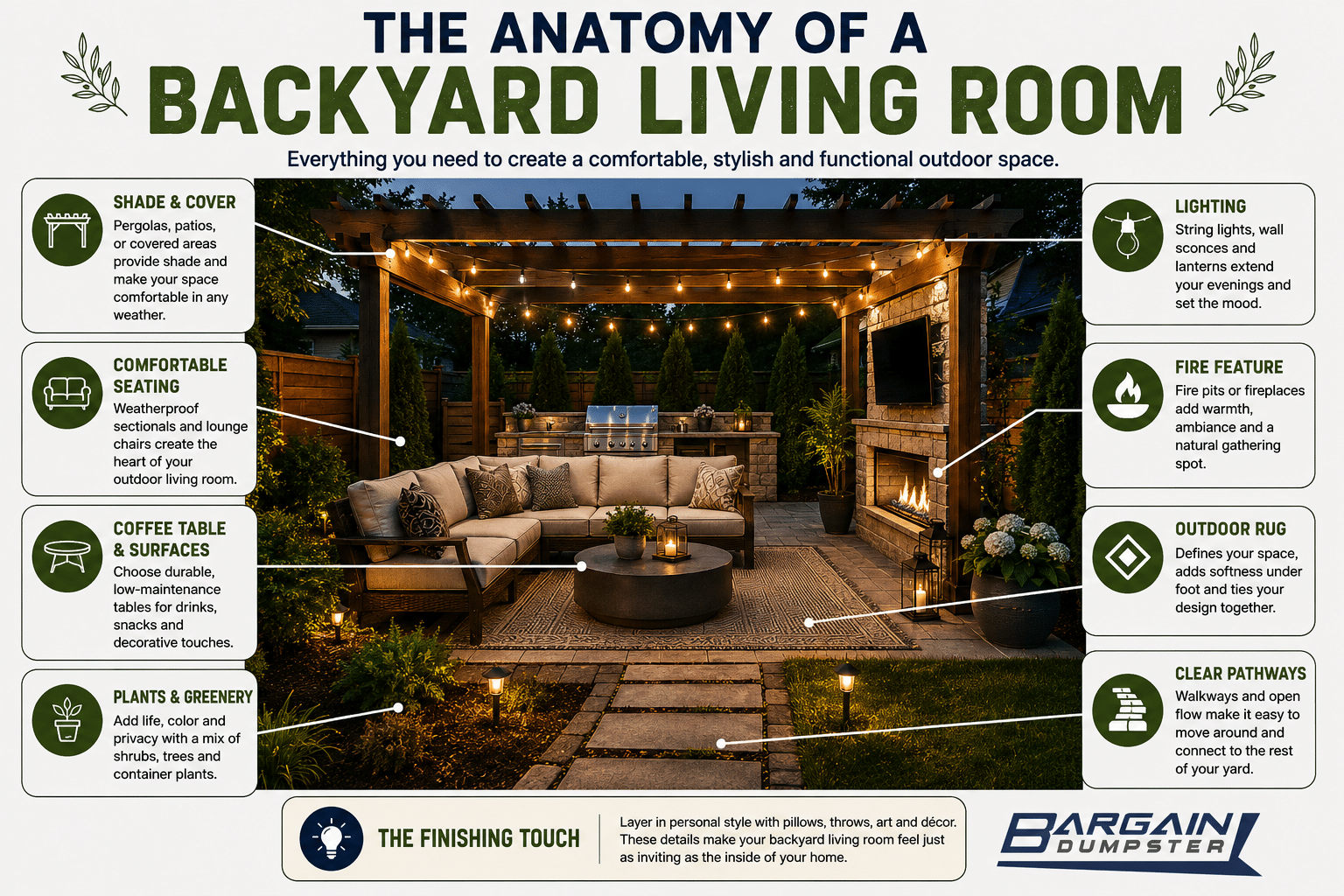
Creating a backyard living room changes how you use and enjoy your property. Fresh air, natural light and thoughtful design create a retreat that rivals any interior room.
Whether you’re starting with a simple seating arrangement or planning a full kitchen setup, each element brings you closer to a backyard that extends your living space. The beauty of this project is that you can build it in phases, adding features as your budget and timeline allow.
If your project involves heavy demo or renovation work, Bargain Dumpster can help manage the cleanup. They make the less glamorous parts of the project easier to handle.